Paper engineering / physical narrative systems

Paper Popup

A collaborative paper-engineered narrative game prototype exploring how popup mechanisms, hidden clues, physical cards, and theatrical page transformations can support cooperative storytelling between adults and children.

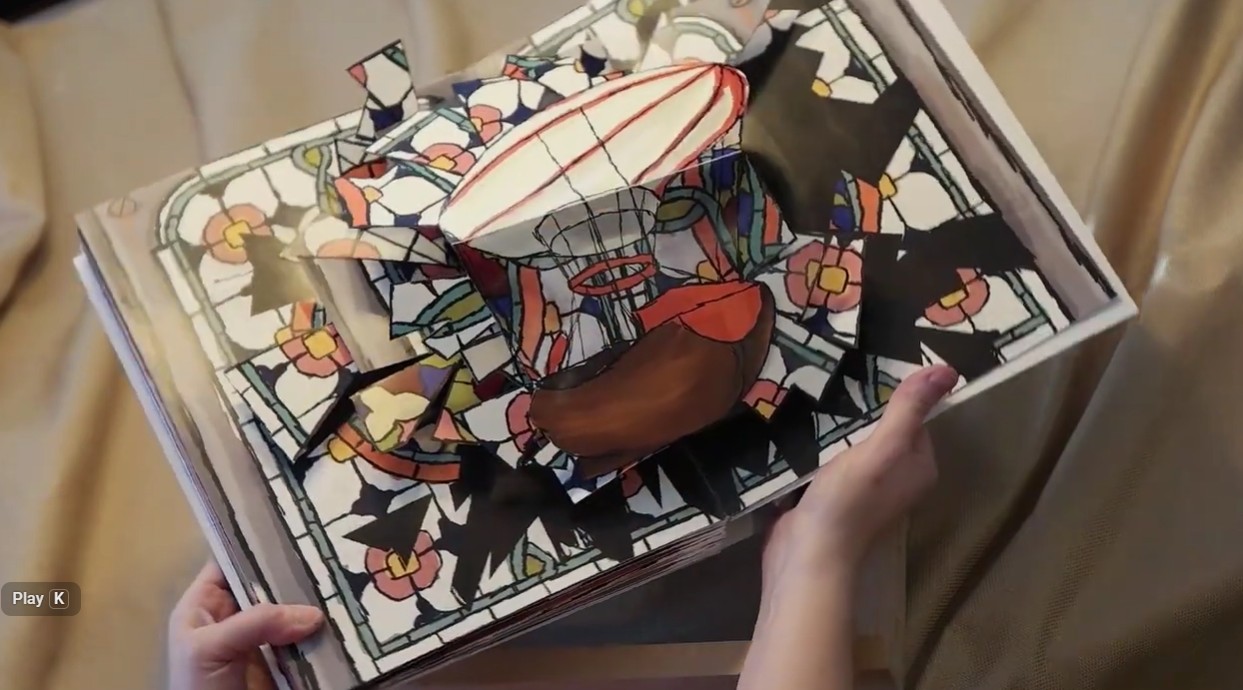
Open pop-up book showing the final dirigible spread.
Final popup spread. The dirigible mechanism becomes both narrative reveal and engineered paper structure.

Core idea

A physical narrative interface

The prototype transforms reading into exploratory play. Popup mechanisms become spaces where clues may be hidden, story cards become prompts for deduction, and page turns become conditional narrative transitions.

Interaction

Clue matching

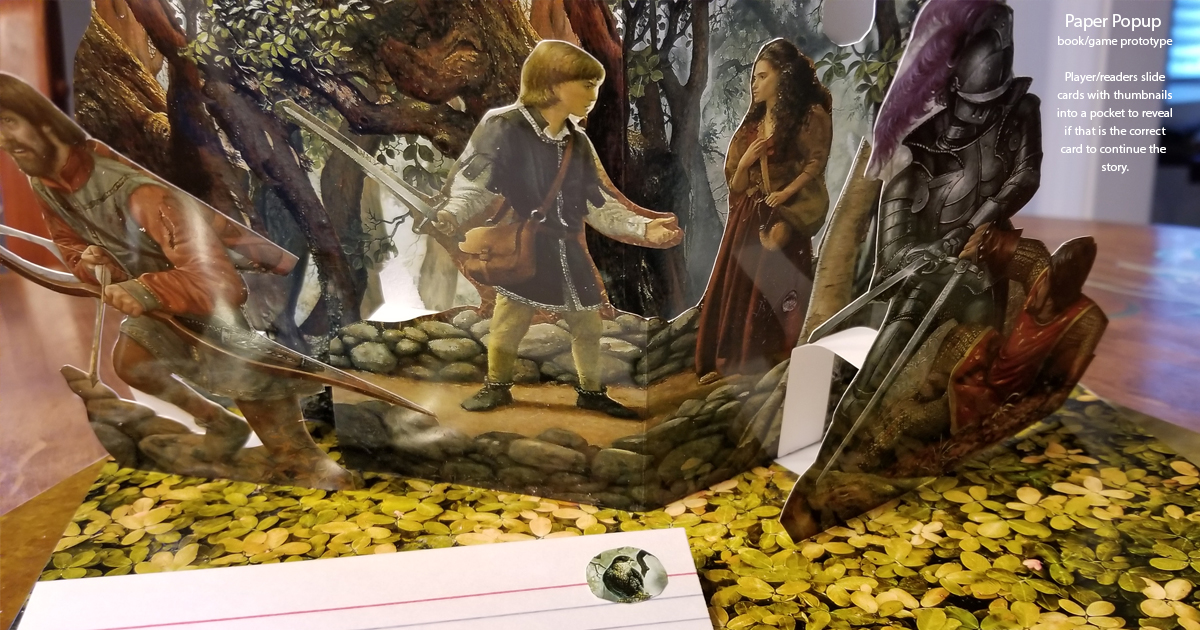
Readers slide cards with thumbnails into a pocket to determine whether the chosen clue continues the story.

Material system

Paper mechanics

Layering, concealment, depth, and reveal emerge from folds, cuts, tabs, and dimensional paper structures.

Collaboration

Team roles

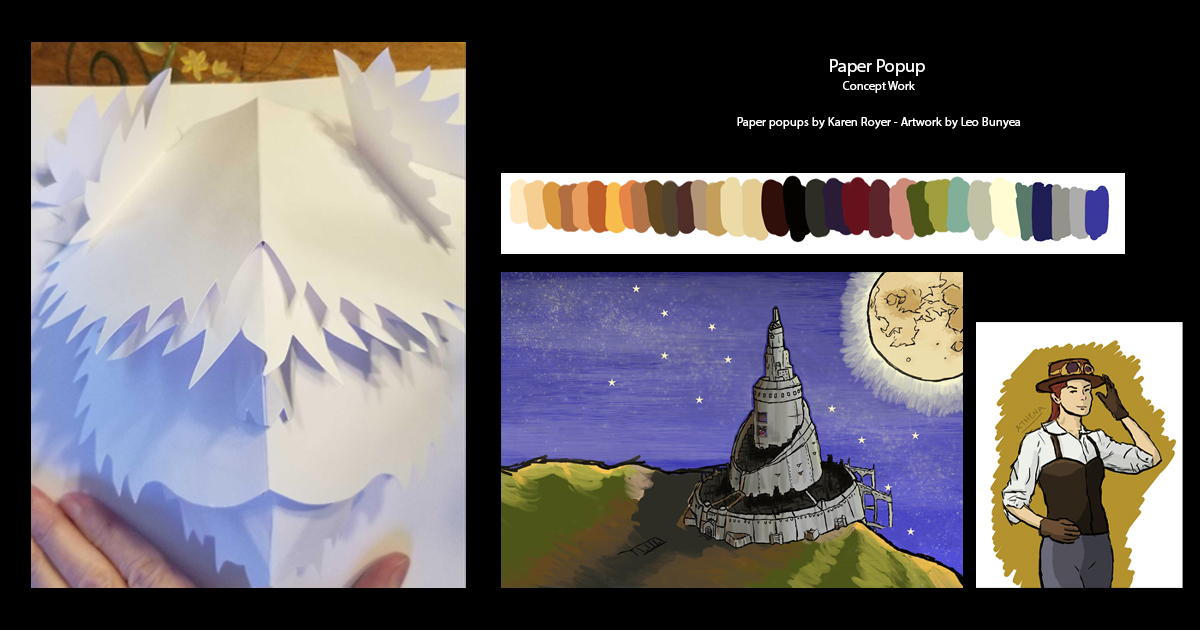
Story and project lead: Karen Royer. Illustration: Leo Bunyea. Paper construction: Karen Royer and Varun Bhat.

Design lineage

Hybrid storytelling

The project anticipates later work in tangible interfaces, material systems, embodied interpretation, and computational media.

Project narrative

Story, mechanism, and play

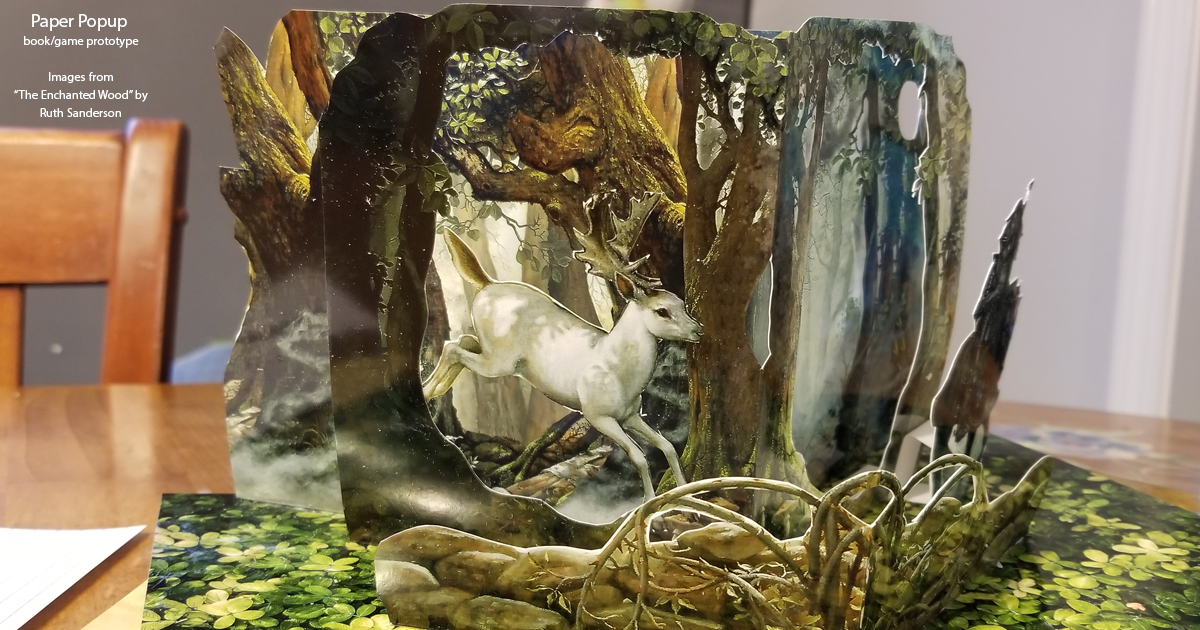
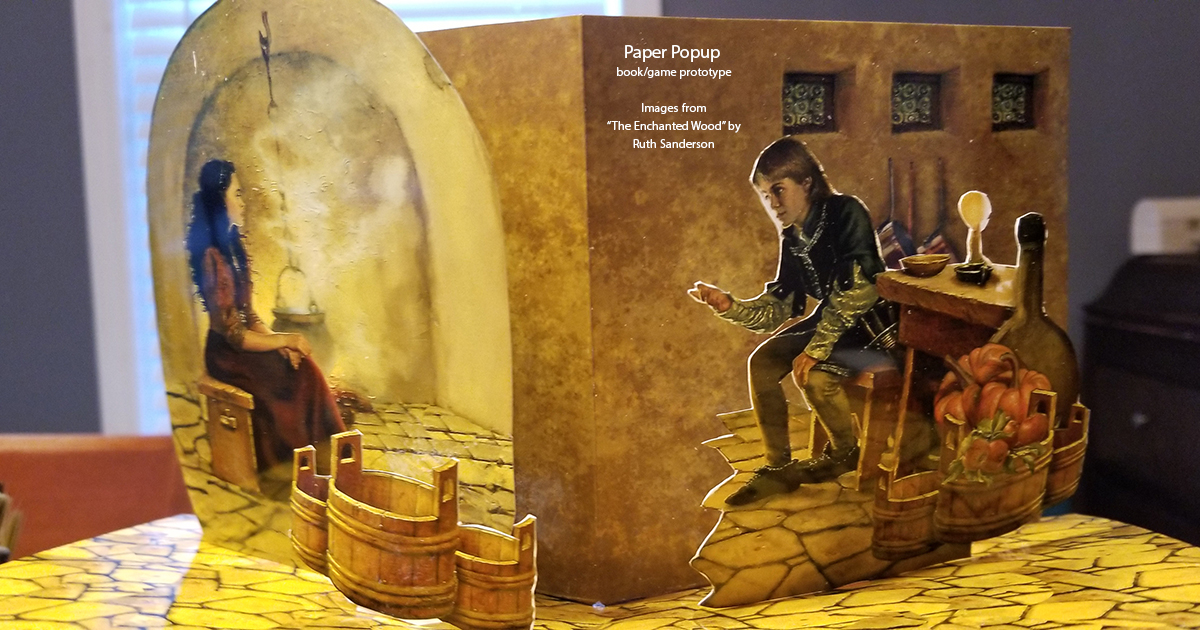
The prototype was designed to test the feasibility of a narrative game in which a parent could read the story only if the child correctly interpreted clues hidden in the popup scenes. The book’s physical structures are not just illustrations; they are interactive spaces that organize story progression.

Early tests used fantasy illustrations, paper pockets, layered scenery, and story cards to ask how a book might become a playable object. The final dirigible spread demonstrates how an engineered popup mechanism can function as a narrative climax.
Production notes

Collaboration and fabrication

  • Karen Royer led the project and was responsible for the story.
  • Leo Bunyea created the illustrations and visual development artwork.
  • Karen Royer and Varun Bhat constructed the paper popup pages and final book.
  • Storyboard documentation was used to track colors and test complex mechanisms.
  • The dog-like face prototype tested how intricate the paper engineering could become.

Related narrative object

The Sleeping Beauty Egg

A hand-carved ostrich egg retelling Sleeping Beauty through Aurora’s self-directed discovery, engineering, escape, and return. The carved egg extends the same interest in dimensional storytelling, craft, and speculative narrative agency.

The Curse

Aurora will sleep while others are awake.

The Discovery

While wandering at night, Aurora finds a library where she reads about everything.

The Plan and Escape

Aurora thinks it is silly to wait for someone to rescue her. She reads about math and engineering and art. She can build a dirigible and fly herself up and out of the briars.

The End?

Aurora flies out into the great world and has many adventures. She joins a group of other like minded folk and they roam the countryside helping where they can. Eventually Aurora returns to her home with many allies with whom she brings prosperity to her kingdom.